 Skip to content


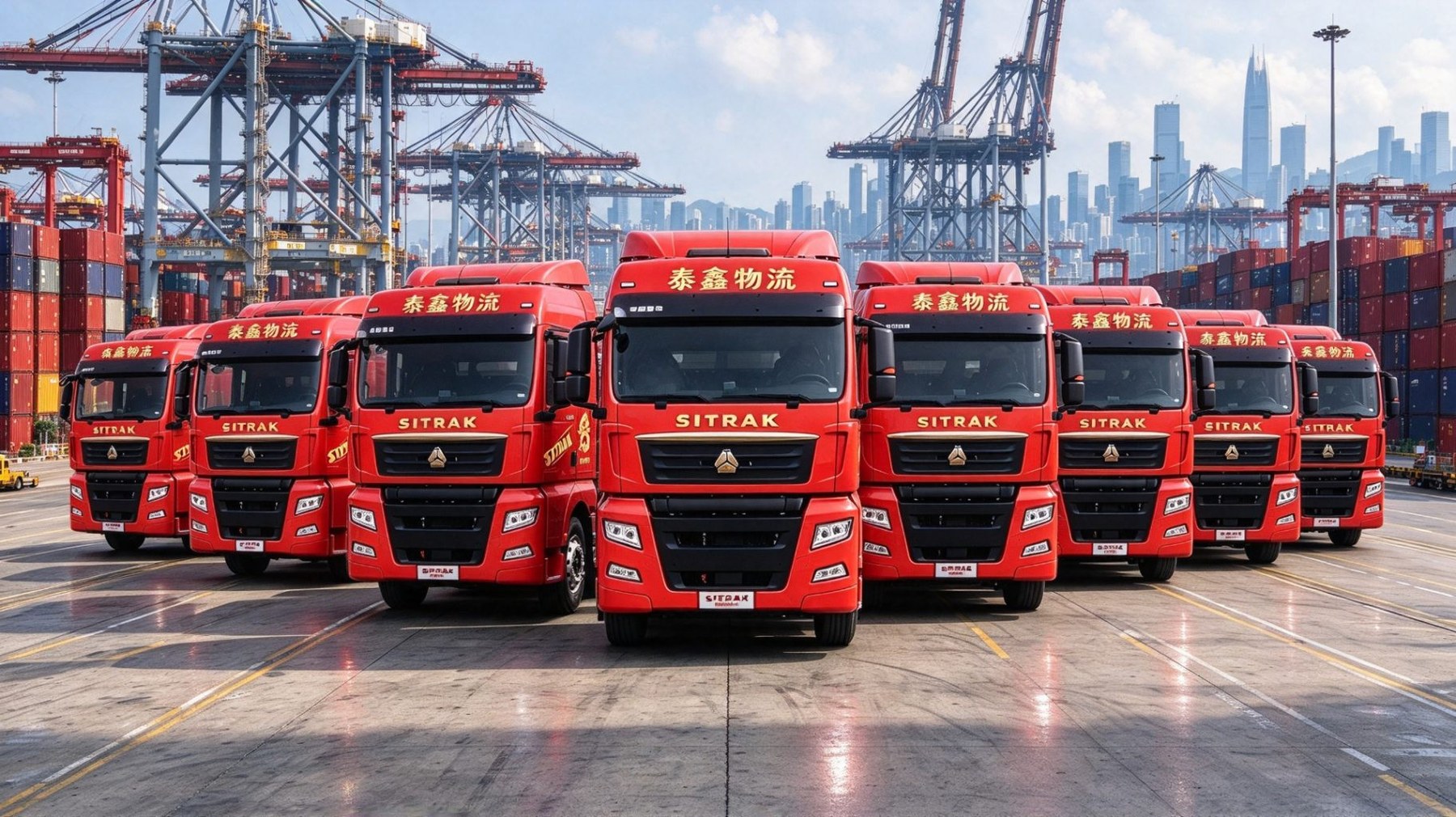
On 29 October, Guangdong's maximum retail price for 0# diesel was adjusted to RMB 8.60 per litre, up RMB 335 per tonne. Within hours, several long-standing export clients asked the same question: will freight rates go up next month? We cannot answer for the whole industry. But we can show you the arithmetic — and explain why we put ten electric tractor units into Yantian this year.
The maths: what one truck burns in a year
A port truck looks like it stays local, yet it makes a dozen round trips a day. At 280 km a day and 330 working days, that is roughly 90,000 km a year. Third-party testing puts diesel consumption in port shuttling at 0.25–0.30 litres per km. At 0.28 litres and RMB 8.60:
- Fuel cost per km: RMB 2.41
- Annual fuel cost: RMB 217,000
An electric tractor on the same duty cycle measures 1.1–1.3 kWh per km. At 1.2 kWh and RMB 0.8 per kWh from our own depot chargers:
- Electricity cost per km: RMB 0.96
- Annual electricity cost: RMB 86,000
RMB 130,000 difference per truck, per year. Across ten trucks, RMB 1.3 million.
Where electric tractors still fall short
We are candid about the drawbacks: purchase price is RMB 100,000–200,000 higher; loaded range is around 200 km; fast charging still takes over 40 minutes; battery weight eats into legal payload; and residual values remain uncertain. Diesel keeps its advantages too — five-minute refuelling, better performance on heavy loads and long gradients, and a dense repair network. So our answer is not "all electric". It is division of labour: electric tractors handle fixed, high-frequency port shuttles and charge overnight on valley tariffs, while the diesel fleet continues to cover long haul, cross-region, emergency, dangerous goods and oversize work.
What this means for clients
- Capacity in peak season — close to 100 owned and contracted vehicles, now with ten more units on port shuttles
- More room on price — shuttle costs are now anchored to electricity, not the diesel pump
- Access to clean-transport terminals — Yantian, Shekou and a growing number of warehouses now restrict diesel vehicles
- Cover when things go wrong — 24-hour dispatch, full GPS tracking, response within one hour
- One provider end to end — terminal containers, long haul, LCL warehousing, customs brokerage, dangerous goods and oversize
Sources: Guangdong Development and Reform Commission fuel price notice (29 October 2026); Smart Freight Centre China electric heavy truck trial report; Ministry of Transport new-energy heavy truck sales data, H1 2026. Consumption figures are industry test ranges; actual cost varies with route, payload and tariff.